
Sourcing a Stone Crusher Screening Line: 2026 CAPEX & Operational Budget Analysis
A B2B procurement breakdown analyzing capital investment costs, structural concrete engineering requirements, and operating expense (OPEX) metrics for aggregate lines.
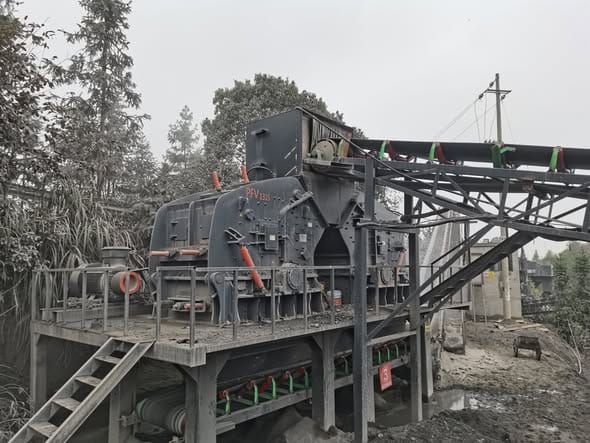
Strategic Capital Allocation & Aggregate Processing Realities
Deploying a complete commercial stone crushing and screening production line represents a massive long-term capital allocation. For mining infrastructure contractors, aggregate quarry developers, and cross-border project investors, a systemic point of capital failure is the miscalculation of site-level civil engineering variables. Procurement managers frequently fixate entirely on the machinery sticker price (FOB Chinese or European gateway ports), while ignoring the non-recoverable outlays tied to structural concrete foundations, heavy steel retaining walls, multi-megawatt high-voltage transformer grids, and localized ocean freight logistics.
In 2026, global infrastructure spending and strict environmental compliance mandates—such as total dust-encapsulation cladding and advanced wet-suppression systems—have fundamentally shifted the entry barriers for raw material processing.
This financial blueprint isolates the precise asset allocations required to commission standard high-demand quarry nodes—specifically contrasting a 150 TPH (Tons Per Hour) Intermediate Circuit and a 300 TPH (Tons Per Hour) Heavy-Duty Infrastructure Line—and delivers the exact operational payback matrices needed to calculate true return on investment (ROI).
Granular Sourcing Budget: 150 TPH vs. 300 TPH Staging Models
To build a reliable fiscal runway, initial asset modeling must account for three distinct expenditure tiers: core crushing/screening machinery, local civil foundation work, and peripheral material-handling heavy machinery. The pricing benchmarks below reflect current 2026 market metrics for certified, tier-1 Chinese manufacturing components cleared at global export shipping lines.
1. Primary Crushing & Screening Plant Assets (FOB Export Ports)
- 150 TPH Circuit (Stationary/Modular): Incorporates a heavy-duty vibrating grizzly feeder (VGF), a primary PE-600×900 Jaw Crusher, a secondary Standard Hydraulic Cone Crusher (such as a 3ft or 4.25ft Symons/HP equivalent), a 3-deck high-amplitude circular vibrating screen, and a centralized electrical control room with low-voltage wiring. The required capital allocation ranges between $145,000 to $195,000 USD.
- 300 TPH Circuit (Stationary Heavy-Duty): Deployed with a high-capacity VGF, a massive PE-900×1200 primary Jaw Crusher, secondary and tertiary Shorthead Hydraulic Cone Crushers running dynamic CSS automation, dual 4-deck high-frequency vibrating screens, centralized automated PLC SCADA control desks, and heavy-duty wear-resistant conveyor belts. The baseline machinery investment spans $380,000 to $520,000 USD.
2. Subsurface Civil Engineering & Heavy Foundation Pads
Civil works are entirely non-recoverable capital costs. For a 150 TPH setup, executing the site excavation, pouring reinforced C30/C35 structural concrete pads for the heavy crushing frames, and constructing concrete surge hoppers requires an allocation of $35,000 to $55,000 USD.
For the high-impact, high-torque 300 TPH line, the massive dynamic forces demand a reinforced concrete foundation grid [1] with heavy steel-mesh reinforcements, driving civil outlays to $75,000 - $130,000 USD.
3. Peripheral Material Handling Fleet
A crushing plant cannot operate without auxiliary earthmoving assets:
- Heavy Mining Excavators (30-to-50 Ton): Required at the quarry face to blast and load raw rock blocks into dump trucks ($85,000 – $180,000 USD used/new tier-1).
- Quarry Front Wheel Loaders (5-to-7 Ton): Mandatory for managing finished aggregate stockpiles and loading delivery trucks ($45,000 – $85,000 USD).
2026 Global Quarry Capital Sourcing Allocation Matrix
The industrial data table below outlines the standard financial percentage distributions required to transition raw mineral land into a fully certified, high-yield aggregate crushing plant.
| Capital Expenditure Segment | 150 TPH Production Line | 300 TPH Infrastructure Line | Asset Priority & Risk Mitigation |
|---|---|---|---|
| Core Crushing Machinery (Jaw/Cone) | 42% of Total Capital | 45% of Total Capital | Fixed CAPEX / Factory Insured |
| Civil Foundation Work & Pads | 12% of Total Capital | 11% of Total Capital | High Risk / Non-Recoverable Local Loss |
| Screening Decks & Conveyor Matrix | 15% of Total Capital | 14% of Total Capital | Ongoing Maintenance Wear Segment |
| Transformer Substation & Grid Utility | 8% of Total Capital | 6% of Total Capital | Critical Infrastructure / Variable Local Fee |
| Ocean Freight, Duties & Logistics | 13% of Total Capital | 16% of Total Capital | Variable Cost / Shipping Loop Dependent |
| Working Cash Operating Reserve | 10% of Total Capital | 8% of Total Capital | Essential Fluid Capital for Fuel & Wear Parts |
Quantitative ROI Modeling & Payback Trajectory
To evaluate project visibility for institutional lenders or private quarry owners, asset managers utilize a strict volumetric operating profit model to calculate the exact calendar timeline required to hit full capital break-even thresholds.
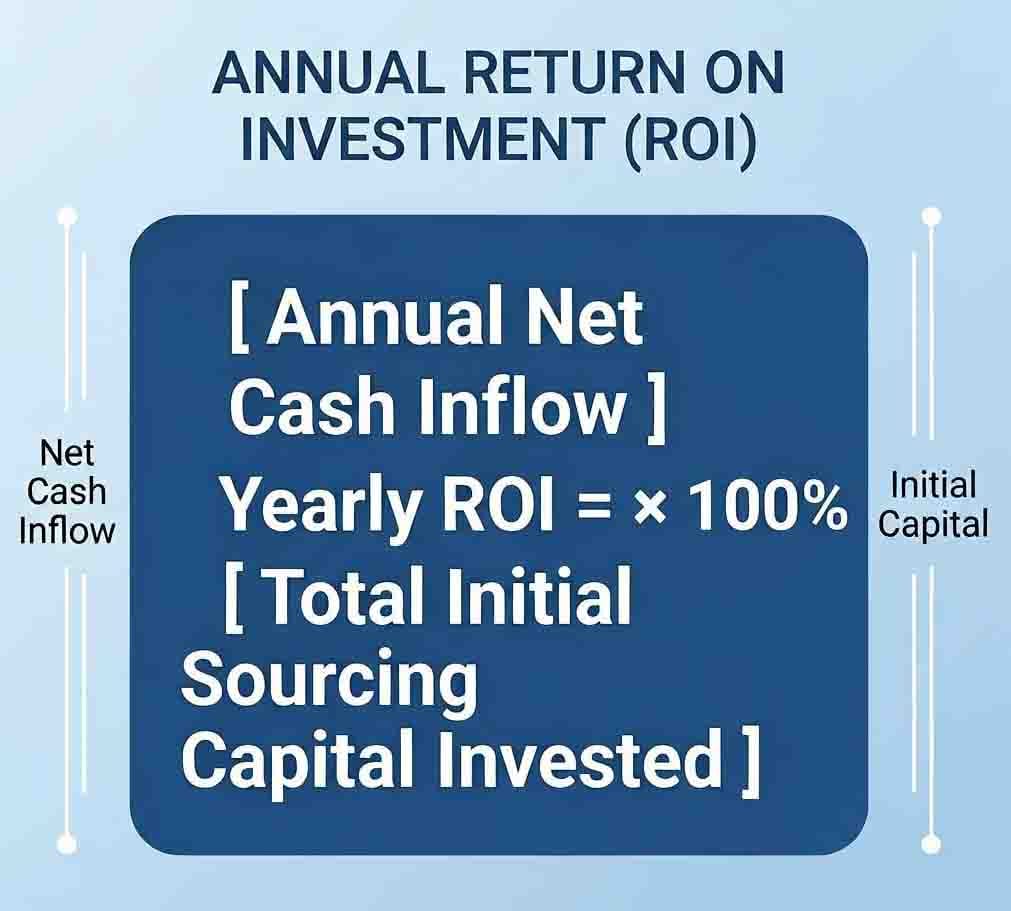
Where Annual Net Cash Inflow is formulated via:
$$\text{Annual Net Cash Inflow} = \text{Annual Production Output (Tons)} \times \text{Net Operating Margin Per Ton ($/Ton)}$$
Real-World Operating Scenario: Sourcing a 150 TPH Plant
- Target Staging Market: Rapidly expanding infrastructure corridor (e.g., Southeast Asia or Middle East road works).
- Average Aggregate Market Selling Price: $11.00 USD per Ton (finished high-grade 0-5mm, 5-10mm, 10-20mm rock).
- Raw Material Sourcing + Labor OPEX (Diesel fuel, electricity, blast fees, wear parts): $7.20 USD per Ton.
- Net Operating Profit Margin: $3.80 USD per Ton.
- Plant Utilization Factor: Running at a realistic 70% efficiency factor over a standard 10-hour shift yields an average output of 1,050 Tons per day.
- Annual Production Volume (250 Working Days): $1,050 \text{ Tons} \times 250 = 262,500 \text{ Tons per annum}$.
- Total Annual Net Cash Inflow: $262,500 \text{ Tons} \times $3.80 \text{ USD} = \mathbf{$997,500 \text{ USD}}$.
Under this highly realistic financial profiling, an initial total project execution investment of $320,000 USD (encompassing core crushing equipment, ocean shipping container freight, local civil pad construction, and transformer grid setup) completely recovers its entire capital layout within 3.8 to 5.2 months of live site commissioning.
Global Sourcing Risk Mitigation Guidelines
To insulate your capital from site-level disruption and secure these rapid payback margins, your procurement team must integrate three strict operational safeguards into the initial factory purchase contract:
- Vibrating Screen Structural Isolation: For the high-throughput 300 TPH system, ensure the vibrating screen steel structure is completely separate from the main secondary cone crusher support columns. If they are tied together on a single unified frame, the high-frequency harmonic vibration vectors will amplify, accelerating structural steel weld tearing, altering electronic load cells, and causing premature bearing seizure in the cone crusher.
- Mandatory Magnetic Tramp Iron Separators: Aggressive aggregate lines are highly vulnerable to loader bucket teeth breaking off in the raw feed pile. Procurement sheets must mandate an automated, over-belt high-intensity Electromagnetic Separator Block placed right after the primary jaw crusher discharge conveyor. This completely isolates your secondary cone crusher liners from uncrushable iron debris, preventing catastrophic mantle shaft cracking.
- Dust Encapsulation Pre-Engineering: Modern environmental regulations require advanced dust suppression. Sourcing agents must ensure all crusher chute discharge joints are built with factory-installed anti-static rubber curtain flaps and high-pressure water misting spray ring rings. This avoids expensive field retrofitting costs when local environmental agencies inspect the active plant site.
TAG
sourcing a stone crusher screening line,stone crusher plant capital cost 2026,aggregate crushing plant operational budget analysis,150 tph stone crusher plant layout price,300 tph heavy duty crushing line configuration
Request Technical Blueprints & Factory Quotes
Submit your machinery parameters below. Connect directly with verified, certified heavy industrial manufacturers to receive custom foundation drawings, layout schematics, and direct-from-factory pricing.